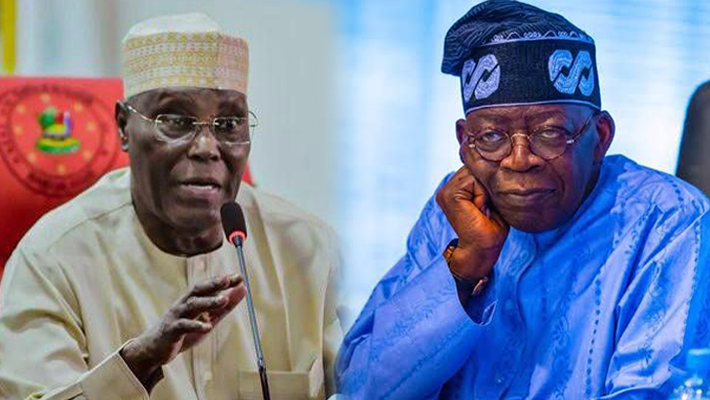
ABUJA, NIGERIA — The former Vice President and presidential candidate of the African Democratic Congress (ADC), Alhaji Atiku Abubakar, has fiercely criticized President Bola Tinubu following his 21-day absence from the country, demanding immediate clarity on who is constitutionally leading Nigeria.
Tripod Times reports that President Tinubu departed Nigeria on August 30 for what the Presidency initially described as a three-week annual vacation in Europe, beginning in London. However, more than three weeks later, the President has yet to return, prompting major concerns over a potential leadership vacuum.
In a sharply-worded statement titled “Who is in charge of Nigeria?”, Atiku cited Section 145 of the Nigerian Constitution, pointing out that there has been no public evidence of a written declaration transmitting power to Vice President Kashim Shettima.
“Nigeria itself cannot be placed on vacation,” Atiku asserted, emphasizing that the country cannot be governed on “autopilot” or from Europe.
Atiku has, however, issued an immediate challenge to both the executive and legislative branches to provide clear transparency:
* The Presidency: Must instantly clarify and publish any official letter transmitting presidential authority to the Vice President.
* The National Assembly: The Senate President and the Speaker of the House of Representatives must reveal if they received such a communication.
* Section 145(2) Activation: Atiku demanded that if no letter was sent, the National Assembly must explain why they have not triggered constitutional mechanisms to handle the prolonged absence.
The controversy deepens as Nigeria’s delegation prepares for the 81st United Nations General Assembly (UNGA) in New York, which begins today, September 22. This marks President Tinubu’s third consecutive absence from the global summit, with Vice President Shettima once again stepping in to lead the Nigerian team.
While opposition figures question if the President’s repeated absence is linked to underlying legal scrutiny or travel restrictions in the United States, the Presidency has fiercely dismissed the claims as baseless political maneuvers.
Presidential spokesperson Bayo Onanuga stated that Tinubu has extended his working vacation by “a few days” but remains in active communication and full command of state affairs.
With citizens grappling with severe economic hardships, surging energy costs, and deep security challenges, critics argue that Nigeria cannot afford an absent leadership. Until a formal letter of transition is produced, the pressing question remains heavily anchored in Abuja’s political atmosphere: Who is truly steering the nation?