
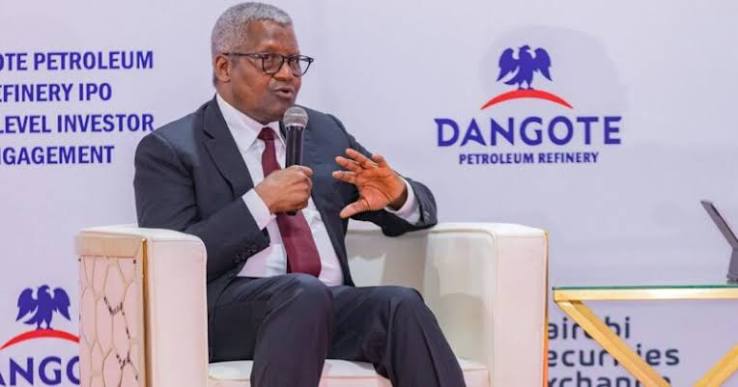
Africa’s richest man and President of Dangote Industries Limited, Aliko Dangote, says he is prepared to confront legal challenges to his businesses and could reduce his ownership of the planned 700,000-barrel-per-day Dangote Petroleum Refinery in Lamu, Kenya, to as little as 25 per cent if more Africans want to invest. Speaking at a fireside chat at the Nairobi Securities Exchange, Dangote said the group was committed to expanding across Africa and viewed the continent as its home. The Lamu refinery is projected to cost between $15 billion and $16 billion and is expected to be completed by 2030.
The project is facing a legal challenge after the Malindi Environment and Land Court ordered that the “status quo prevailing” on the disputed land be maintained until a hearing on October 14. The case was filed by 133 residents of Chandavai, Lamu County, who claim the land earmarked for the refinery is ancestral property. Dangote Group said the order has not stopped the groundbreaking ceremony, although activities at the site could be affected. Dangote, however, struck a defiant tone, saying: “Anyone who wants to cause trouble, we are ready for them.” He cited a previous dispute in Senegal, where one of the group’s factories was shut for a year before the company secured a Supreme Court judgment.
Dangote said the Lamu project could create more than 60,000 jobs and attract small businesses and other industries to the area. He also revealed plans to list the refinery on the Nairobi Securities Exchange rather than the Nigerian Exchange, arguing that major African investments should give local investors an opportunity to participate. “We don’t have to list it in Nigeria. We should list it here,” he said, signalling a broader push to deepen African capital markets and expand local ownership of Dangote businesses.
On ownership, Dangote said the group initially planned to raise $2.5 billion through a private placement and an initial public offering, but strong demand led to an additional $1.6 billion offering. He said the company was willing to sell more shares if demand remained strong, even if Dangote’s stake eventually fell to 25 per cent. “We don’t mind, even if Dangote will end up having twenty or twenty-five per cent,” he said. Dangote also stressed that greater public ownership would give shareholders more influence, including the power to vote out management if they were dissatisfied with the company’s performance.