
The Federal Government will now use Kaduna State’s household mapping approach as the national template for tracking out-of-school children. This signals a shift away from planning based on estimates to interventions driven by actual data, with the goal of getting millions of Nigerian children back into classrooms.
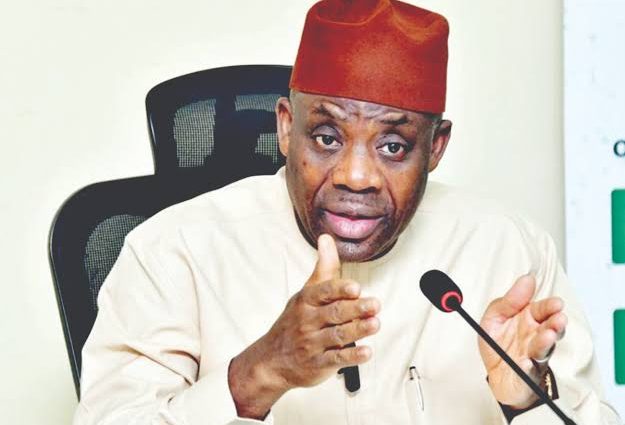
Tripod times reports that the announcement was made on Thursday by the Minister of Education, Dr. Tunji Alausa, after a meeting with Kaduna State Governor, Uba Sani. The information was contained in a statement released by the minister’s Special Adviser on Media and Communications, Ikharo Attah.
Under the new plan, the Federal Ministry of Education will work with the National Bureau of Statistics to carry out a nationwide household mapping exercise. The exercise will cover all 36 states and the FCT, and it will establish the precise number of out-of-school children, their locations, and the households they come from.
The ministry stated that the mapping will end the dependence on rough estimates. Instead, it will rely on verified data collected at the household level, allowing both federal and state governments to design focused programs and use resources more efficiently.
At the meeting, Alausa described the initiative as a major move toward addressing one of Nigeria’s most pressing education problems.
He said, “With this exercise, we now know where these children are and the households they belong to. That gives us the opportunity to work closely with the Kaduna State Government to bring them back to school.”
The minister added that education planning has long depended on projections that did not accurately show where out-of-school children were located.
According to him, the nationwide mapping will supply verified data to inform policy and ensure that support reaches the children who need it most.
Citing Kaduna as an example, Alausa said earlier estimates put the state’s out-of-school children at around 585,000. However, the household mapping carried out by the state showed the real figure was under 200,000.
He praised Governor Uba Sani for leading the way with a model that has given a clearer picture of the problem and shown how accurate data can strengthen education planning and service delivery.